
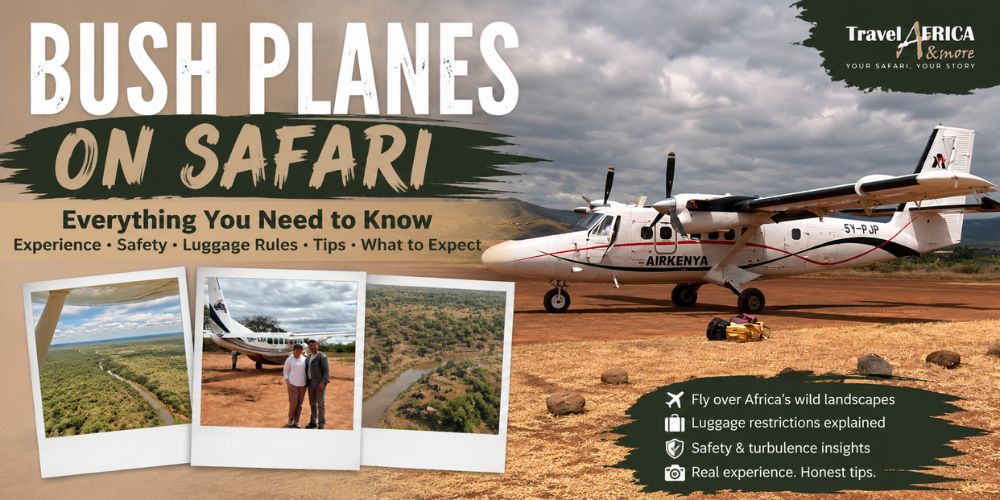
What Flying on a Safari Bush Plane Really Feels Like, From First-Time Fear to Unforgettable Views
The safari itself sounded exciting.
The tiny bush plane? That part made me nervous.
Before my first safari in Africa, I imagined open savannahs, luxury camps, elephants crossing rivers, and dramatic sunsets over the wilderness. What I didn’t expect was hearing that part of the journey involved flying in a small aircraft into remote safari regions.
Not a commercial airline.
Not a large jet.
A tiny bush plane landing on dirt airstrips in the middle of the African wilderness.
For many first-time safari travelers, bush plane flights become one of the most exciting and intimidating parts of the entire experience. And honestly, that fear is completely normal.
But once you’re actually in the air, flying low over endless bush plains, rivers, forests, and wildlife below, something changes quickly. The flight stops feeling like transportation and starts feeling like part of the safari itself.
What Is a Bush Plane on Safari?
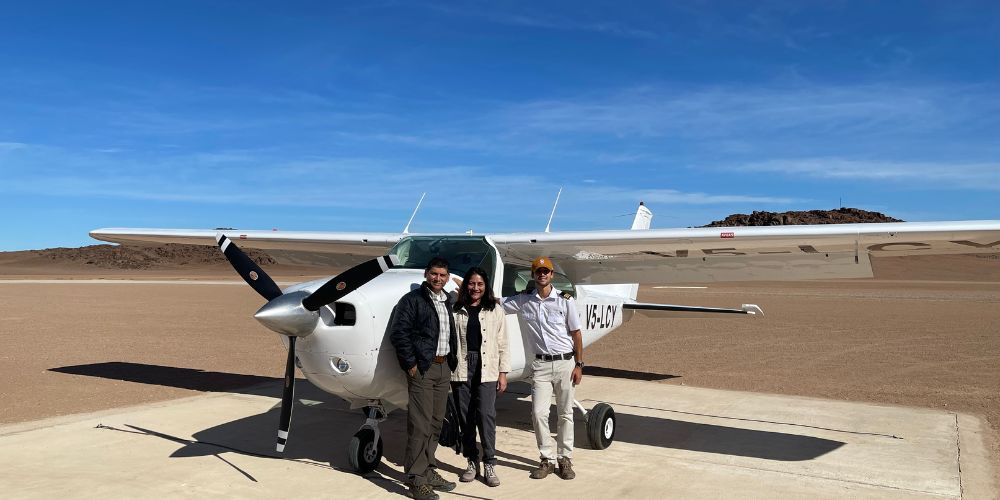
A bush plane is a small aircraft used to transport safari travelers between remote camps, national parks, and wilderness areas that are difficult to access by road.
These flights are extremely common in African safari destinations such as:
- Serengeti National Park
- Nyerere National Park
- Masai Mara National Reserve
- Okavango Delta
- Hwange National Park
Unlike commercial airports, bush planes land on:
- dirt runways
- grass airstrips
- remote safari landing areas
Most flights are operated using small aircraft carrying around 8-12 passengers, depending on the route and operator.
These flights are usually short, often between 30 and 90 minutes, but they completely change the feeling of a safari journey.
Why Bush Planes Are Used on Safari
One thing many first-time travelers don’t realize is how massive safari regions actually are.
Driving between parks can sometimes take:
- 6 hours
- 8 hours
- or even an entire day
Bush plane transfers help travelers:
- avoid exhausting road journeys
- access remote luxury camps
- move between safari regions efficiently
- maximize game viewing time
In destinations like Tanzania or Botswana, some camps are so remote that flying is the only practical way to reach them.
And while many people initially see the flight as “just transport,” it often becomes one of the highlights of the safari itself.
What Flying in a Bush Plane Actually Feels Like
This is the part nobody can fully explain until you experience it yourself.
The first thing you notice is how different everything feels compared to normal air travel.
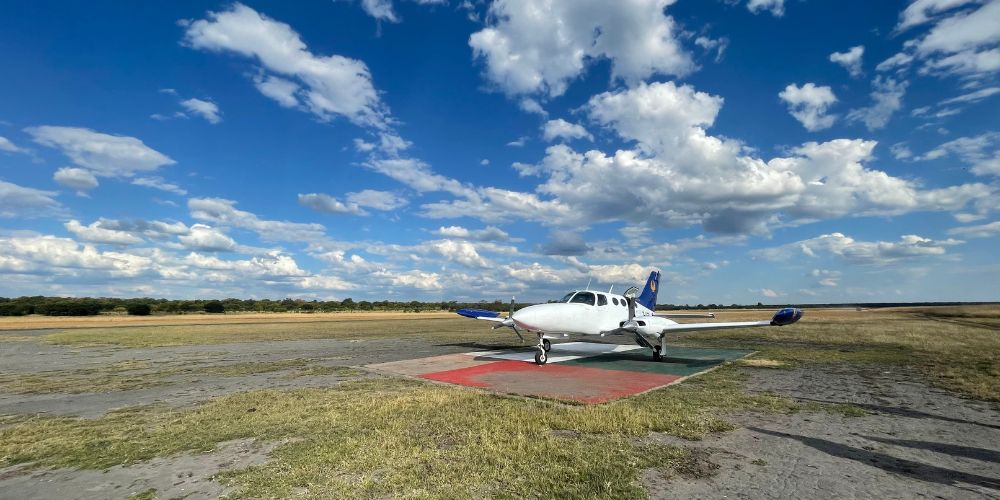
There are no giant terminals, crowded boarding gates, or long airport queues. Sometimes you arrive at a tiny safari airstrip with little more than a shaded waiting area and a short dirt runway stretching into the bush.
Then the aircraft arrives.
And yes, for first-time travelers. It can feel small.
Very small.
The engine sounds louder. The cabin feels compact. You can often see directly into the cockpit. If you’re nervous about flying, your brain immediately notices every little vibration and movement.
But once the aircraft lifts off, the entire experience changes.
Because bush planes fly much lower than commercial aircraft, you don’t just see clouds, you see Africa itself unfolding underneath you.
Wide golden plains.
Winding rivers.
Scattered acacia trees.
Tiny safari tracks cutting through the wilderness.
And sometimes, if you’re lucky, wildlife moves below.
Some bush planes have surprisingly large windows, which makes the aerial scenery even more dramatic. Pilots often know the landscape and wildlife areas incredibly well, and flying low above the bush creates a completely different perspective of the safari ecosystem.
What surprised me most was how quickly fear turned into fascination.
The very thing that felt intimidating before takeoff became one of the most memorable parts of the trip.
The Fear Factor: What Nervous First-Time Travelers Should Know
If you feel nervous about bush planes, you are absolutely not alone.
Small aircraft naturally feel more intense because:
- You feel turbulence more
- The aircraft sits lower
- The engine sounds feel louder
- Every movement feels more noticeable
I actually experienced something similar years ago while skydiving. I thought the jump itself would be the scary part, but the tiny aircraft that took us up was what genuinely terrified me.
By the time the plane reached altitude, I was almost happy to jump out of it.
That same “tiny plane fear” can happen on safari bush flights, too, especially for first-time travelers.
But there are a few important things worth remembering:
- Bush pilots fly these routes daily
- Flights are usually short
- These aircraft are designed specifically for remote safari operations
- Turbulence is common but usually normal
The emotional anticipation before the flight is often worse than the flight itself.
Tips If You’re Nervous About Bush Plane Flights
If small aircraft make you anxious, there are ways to make the experience much more comfortable.
Choose Fewer Bush Flights
Some safari itineraries combine:
- road transfers
- one short bush flight
- regional commercial flights
This can reduce anxiety significantly.
Ask About Road Transfer Options
In some safari destinations, scenic road transfers are available instead of internal flights.
And honestly, some drives are incredible on their own.
You experience:
- local villages
- changing landscapes
- wildlife sightings along the route
- gradual transition into the wilderness
Focus on the Scenery
One thing that helps enormously is simply looking outside.
Bush plane flights offer views you rarely experience anywhere else in the world.
Flying low above the wilderness adds an incredible “wow factor” that commercial flying simply cannot replicate.
Understand That Turbulence Feels Bigger in Small Aircraft
Small planes react more visibly to air movement, which makes turbulence feel stronger even when conditions are completely manageable.
Knowing this beforehand helps mentally.
The Unexpected Beauty of Flying Over the African Bush
One of the most unforgettable parts of a flying safari is seeing how dramatically the landscape changes from above.
In southern Tanzania near Nyerere National Park, for example, the scenery can shift from humid lake regions and palm forests into rolling savannahs and riverine woodland within a relatively short distance.
From the air, these transitions become even more spectacular.
You begin understanding how enormous and untouched these ecosystems really are.
And then there are the rivers.
Seeing elephants crossing waterways from above feels surreal, almost like watching a wildlife documentary in real time. In some areas, the crossings even resemble the famous river scenes associated with the Okavango Delta.
The aerial perspective gives you an entirely different appreciation for the scale of the African wilderness.
USE ORIGINAL IMAGES
Bush Plane Luggage Restrictions Explained
This is one of the most important practical things safari travelers need to know.
Bush planes have strict luggage limits because:
- Aircraft are small
- Cargo space is limited
- Weight distribution matters for safety
Most safari operators require:
- soft-sided duffel bags
- flexible luggage
- limited total weight
Hard-shell suitcases are usually not allowed.
Typical Luggage Limits
East Africa
Countries like:
- Kenya
- Tanzania
- Uganda
Typically allow around:
- 15kg / 33 lbs total
Southern Africa
Countries like:
- Botswana
- Namibia
- Zambia
- Zimbabwe
Often allow:
- 20kg / 44 lbs total
This total usually includes:
- main luggage
- hand luggage
- camera equipment
Some airlines allow extra weight purchases, but this should always be discussed with your safari specialist before departure.
Can Bush Plane Flight Schedules Change?
Yes, and this is completely normal in safari travel.
Bush plane schedules are often more flexible than commercial airline operations.
Flights may change due to:
- weather
- passenger routing
- multiple camp stopovers
- runway conditions
Sometimes the aircraft lands at several safari camps along the route, dropping off and collecting travelers before continuing onward.
That flexibility is part of how remote safari logistics operate.
The key is understanding that safari travel works differently from major commercial airports. Once you accept that rhythm, the experience feels far more relaxed.
Bush Plane Safari vs Road Transfer Safari
Both experiences have advantages.
| Bush Plane Safari | Road Transfer Safari |
| Faster travel between parks | Slower but scenic |
| Incredible aerial views | Ground-level wildlife experience |
| Access to remote camps | Better for nervous flyers |
| Feels adventurous and exclusive | Often more budget-friendly |
| Saves significant time | Allows gradual landscape immersion |
Neither option is automatically better.
It really depends on:
- your comfort level
- safari style
- budget
- available time
Some travelers love the thrill of bush planes. Others prefer staying entirely on the ground.
And honestly, both can be amazing.
Arriving at a Remote Safari Camp
One of the most surreal safari moments happens immediately after landing.
The aircraft touches down on a dirt or grass runway surrounded by complete wilderness.
No major airport.
No city.
No buildings in sight.
Sometimes a safari vehicle is already waiting beside the airstrip while giraffes or antelope stand quietly in the distance.
Within minutes, your safari has fully begun.
That transition from aircraft to wilderness feels incredibly cinematic.
And once you finally arrive at camp, hearing the sounds of nature around you, sitting beside rivers, or watching elephants move through the distance, the nervousness from the flight usually disappears very quickly.
The experience simply feels worth it.
Final Thoughts
Before my first safari, bush planes were honestly one of the things I worried about most.
The tiny aircraft.
The turbulence.
The remote airstrips.
But looking back now, those flights became part of what made the safari unforgettable.
Because safari travel is not only about the destination.
Sometimes the experience begins the moment the wheels leave the ground, and the African wilderness opens beneath you.





![Some journeys are even more special when shared.
Imagine waking up to the sounds of the African bush, exploring Kenya’s remote conservancies together, enjoying private picnics and spending nights beneath endless African skies.
From The Emakoko and Lewa House to Ol Malo Lodge and Sarara Treehouses, this romantic Kenya safari brings together four extraordinary stays, each offering a different side of the wilderness.
2027 Long Stay Savings: Enjoy 10% OFF on stays of 5+ nights. Select dates apply.
Whether you're planning a honeymoon, anniversary or simply an unforgettable escape for two, we'll help you create a safari that feels entirely your own.
📩 DM us to start planning your romantic Kenya safari.
[Kenya Honeymoon Safari, Luxury Kenya Safari, Romantic Safari, Kenya Safari for Couples, Lewa Conservancy, Laikipia, Sarara Treehouses, Bespoke African Safari]](https://travelafricamore.com/core/modules/313e568472/img/placeholder.png)