
Key Highlights:
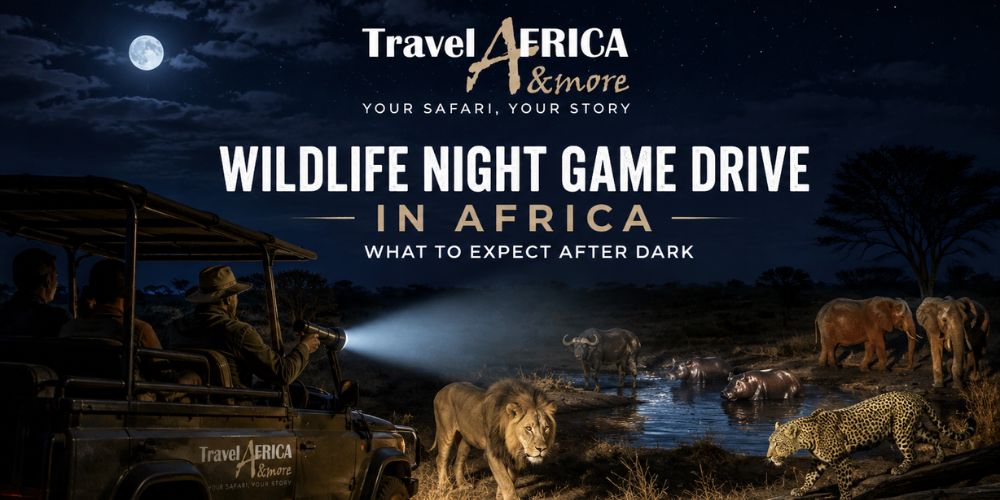
- Night game drives reveal a completely different side of Africa’s wildlife, with nocturnal animals emerging and predators becoming significantly more active after sunset.
- Visitors may encounter lions, leopards, hyenas, hippos, elephants, buffalo, bush babies, civets, genets, porcupines, honey badgers, and other elusive species rarely seen during daytime safaris.
- Night safaris offer opportunities to observe natural behaviours such as hunting, stalking, feeding, territorial patrols, and social interactions that often occur under the cover of darkness.
- Most night game drives take place in private reserves and conservancies across East and Southern Africa, including areas around the Masai Mara, Ol Pejeta, Lake Manyara, and Tarangire.
- Guided night drives typically last 2 to 3 hours and use carefully controlled red-filtered spotlights to locate wildlife while protecting animal night vision and minimising disturbance.
The African sun has just slipped below the horizon, painting the sky in brilliant shades of orange, pink, and purple. The daytime chorus of birds gradually fades away, replaced by a completely different soundtrack of rustling grass, distant calls, chirping insects, and perhaps the unmistakable roar of a lion somewhere in the darkness.
For many safari travellers, this is when the real adventure begins.
Night game drives are an essential activity for anyone seeking a complete African safari experience. While daytime safaris showcase Africa’s famous wildlife under the bright sun, an entirely different world emerges after dark. New animal species take center stage, while many of the animals seen during the day become significantly more active once temperatures cool and darkness provides cover.
The African wilderness never truly sleeps. As the sun sets, predators begin their nightly patrols, nocturnal mammals emerge from hiding, and the natural drama of survival unfolds across the landscape. A night game drive offers visitors a rare opportunity to witness this hidden side of Africa and observe wildlife behaviours that are seldom seen during daylight hours.
Ready to discover who might be waiting for you in the darkness? Here are some of the incredible nocturnal encounters that could make your night safari absolutely unforgettable.
Why Night Game Drives Are One of Africa’s Most Exciting Safari Experiences
A night game drive is far more than a daytime safari conducted in the dark. It offers a completely different perspective on African wildlife and often reveals behaviours that remain hidden during daylight hours.
Many animals spend the hottest part of the day resting or conserving energy. Once temperatures begin to drop, however, the bush becomes increasingly active. Predators leave their resting places, herbivores move out to feed, and nocturnal creatures emerge from burrows, trees, and dense vegetation.
One of the biggest attractions of a nocturnal wildlife safari is the chance to observe natural behaviours such as hunting, stalking, feeding, territorial patrols, and social interactions. While wildlife sightings can never be guaranteed, many of Africa’s most dramatic moments occur after sunset when predators have the advantage of darkness.
Nighttime is often when lions coordinate hunting efforts, leopards patrol their territories, and hyenas search for food. For safari enthusiasts, witnessing these behaviours provides a deeper understanding of how African ecosystems function once daylight disappears.
The atmosphere also contributes to the excitement. Sounds seem louder in the darkness, and every rustle in the grass or distant animal call sparks curiosity. Unlike a daytime safari, where wildlife can often be spotted from a distance, night drives create a sense of mystery and anticipation because you never know what may appear in the spotlight next.
Incredible Animals You May Encounter After Dark
One of the greatest benefits of a night game drive is the opportunity to encounter species that are rarely seen during the day. While every safari is unique, several animals are particularly associated with Africa’s nocturnal wilderness.
Lions – Silent Hunters of the Darkness
Lions are among the most exciting animals to encounter after sunset. During the day they often spend hours resting in the shade, conserving energy for the cooler evening hours.
As darkness falls, lions become significantly more active. Pride members may begin moving together through their territory, communicating through vocalisations and coordinating their movements as they search for opportunities to hunt. While an actual hunt is never guaranteed, nighttime offers some of the best chances to observe stalking behaviour and witness the natural dynamics of a lion pride.
Even hearing a lion roar in the darkness can be a thrilling experience. The sound can travel for several kilometres across the savannah, creating a powerful reminder that you are sharing the wilderness with one of Africa’s most iconic predators.
Leopards – Shadows in the Spotlight
Few safari sightings generate as much excitement as a leopard emerging from the darkness. Naturally secretive and primarily nocturnal, leopards are often easier to spot at night than during the day.
These solitary predators spend much of the evening moving through their territories, searching for prey and avoiding competition from larger predators. A nighttime sighting may reveal a leopard crossing a track ahead of the vehicle, resting briefly in a tree, or silently moving through tall grass.
Because of their elusive nature, many safari travellers consider a nighttime leopard encounter to be one of the highlights of an African safari.
Hyenas – Bush’s Most Misunderstood Predator
The sounds of hyenas are among the most recognisable elements of the African night. Their calls, laughs, and vocal exchanges often echo through the darkness long before the animals themselves are seen.
Hyenas are highly intelligent and social animals with complex clan structures. Night game drives frequently reveal their fascinating interactions as they communicate with one another, travel across their territories, and search for food. While often misunderstood, hyenas are skilled hunters and play an important role within African ecosystems.
Watching their behaviour after dark provides valuable insight into one of Africa’s most successful predators.
Buffalo, Hippos and Elephants at Night
Not all memorable nighttime encounters involve carnivores.
Hippos are particularly active after sunset, often leaving rivers and lakes to graze on surrounding grasslands. Many first-time safari visitors are surprised to discover how far these massive animals can travel while feeding at night.
Elephants also take advantage of cooler temperatures to continue feeding and moving through the landscape. Seeing a family group illuminated by a spotlight beneath a star-filled sky can be a truly unforgettable experience.
Buffalo frequently remain active throughout the evening and may be encountered grazing in open areas or moving between feeding grounds. Their size and presence become even more impressive when viewed in the darkness.
Small Creatures, Big Nighttime Surprises: Nocturnal Wildlife
Night game drives also introduce visitors to a fascinating collection of smaller nocturnal species.
Bush babies are among the most entertaining animals to observe. Their enormous eyes are perfectly adapted for low-light conditions, and their ability to leap between branches makes them fascinating to watch.
Night birds such as owls and nightjars also become active after sunset, adding another dimension to the nighttime safari experience. Their calls contribute to the unique soundtrack of the African bush after dark.
Visitors may also encounter genets, civets, honey badgers, porcupines, and even aardvarks. These elusive mammals are rarely seen during daytime safaris, making every sighting feel special. For experienced safari enthusiasts, spotting an aardvark can be just as exciting as seeing a lion or leopard due to its rarity.
How Guides Spot Animals in Complete Darkness
Many first-time visitors wonder how guides are able to find wildlife after sunset.
The answer is a combination of experience, local knowledge, and specialized equipment.
Guides use spotlights to scan the landscape for movement and eye reflections. Many animals have reflective layers behind their eyes that create a distinctive shine when illuminated by light. Skilled guides know how to recognise these reflections and identify different species even before the animal becomes fully visible.
Years of experience also allow guides to interpret sounds, tracks, and subtle signs of animal activity. They often know where particular species are likely to be active and can use this knowledge to
Why Red-Filtered Spotlights Are Used
Responsible wildlife viewing is an important part of every night game drive.
Guides often use red-filtered or specially controlled spotlights because they are less disruptive to wildlife than bright white lights. These filters help protect animal night vision and reduce unnecessary stress.
Drives are carefully managed to ensure that animals can continue their natural behaviour without disturbance. The goal is to observe wildlife responsibly while providing guests with meaningful sightings.
Visitors should also avoid using bright flashlights unless absolutely necessary. If a flashlight is required, a red-filtered light is the best option because it helps preserve both human and animal night vision.
Where Can You Go on a Night Game Drive?
Night game drives are commonly offered in parts of East Africa and Southern Africa, particularly within private reserves and conservancies where special permits allow nighttime wildlife viewing.
In Kenya, several conservancies surrounding the Masai Mara offer excellent night safari opportunities. Ol Pejeta Conservancy is another well-known destination where visitors can experience nocturnal wildlife activities.
In Tanzania, selected areas around Lake Manyara and Tarangire provide opportunities for guided night drives.
It is important to note that night game drives are generally not permitted in most national parks. Instead, they are usually conducted within private reserves, conservancies, and safari concessions that have specific authorisation for nighttime activities.
Are Night Game Drives Safe?
Night game drives are considered very safe when conducted by professional safari operators.
Guests remain inside specially designed safari vehicles while experienced guides monitor wildlife activity and maintain safe viewing distances. Guides receive extensive training in animal behaviour and know how to manage encounters responsibly.
Vehicles follow established routes and operational procedures designed to prioritise both guest safety and wildlife welfare. By following the guide instructions and remaining inside the vehicle, visitors can enjoy a thrilling experience with confidence.
What to Expect During a Night Game Drive
Most night game drives begin around sunset, typically between 6:30 PM and 7:00 PM, when nocturnal wildlife starts becoming active.
Excursions generally last between two and three hours, often continuing until around 9:00 PM, although some experiences may extend later depending on the location and wildlife activity.
Unlike traditional road trips, night drives are measured more by time than distance. Vehicles usually travel slowly and cover approximately 15 to 30 kilometres (10 to 18 miles) while focusing on wildlife sightings rather than covering large distances.
This slower pace allows guides to investigate tracks, listen for animal calls, and spend time observing interesting sightings.
Essential Tips for First-Time Night Safari Travellers
A few simple preparations can make your night safari even more enjoyable.
Use red-filtered lights only if you need a flashlight. Bright white lights can temporarily affect both animal and human night vision and may interfere with wildlife viewing.
Expect unusual sounds throughout the evening. Lions, hyenas, insects, owls, and countless other creatures create a nighttime soundtrack that can feel very different from anything experienced during the day.
Photography can be challenging in low-light conditions, so it is important to understand your camera’s capabilities before the drive. Flash photography should always be avoided because it can disturb wildlife and is generally prohibited.
Most importantly, remain patient and enjoy the experience. Night game drives are about discovery, and some of the most memorable sightings occur when least expected.
Final Thoughts
A night game drive reveals a side of Africa that many visitors never get to see. As darkness falls, familiar landscapes transform into a world of mystery, movement, and remarkable wildlife encounters.
From lions on the hunt and leopards on the move to bush babies leaping through the trees and aardvarks emerging from their burrows, the African night offers a completely different safari experience. Combined with the sounds, atmosphere, and excitement of exploring the wilderness after dark, it is easy to understand why many travellers consider a night game drive one of the highlights of their safari adventure.





![Some journeys are even more special when shared.
Imagine waking up to the sounds of the African bush, exploring Kenya’s remote conservancies together, enjoying private picnics and spending nights beneath endless African skies.
From The Emakoko and Lewa House to Ol Malo Lodge and Sarara Treehouses, this romantic Kenya safari brings together four extraordinary stays, each offering a different side of the wilderness.
2027 Long Stay Savings: Enjoy 10% OFF on stays of 5+ nights. Select dates apply.
Whether you're planning a honeymoon, anniversary or simply an unforgettable escape for two, we'll help you create a safari that feels entirely your own.
📩 DM us to start planning your romantic Kenya safari.
[Kenya Honeymoon Safari, Luxury Kenya Safari, Romantic Safari, Kenya Safari for Couples, Lewa Conservancy, Laikipia, Sarara Treehouses, Bespoke African Safari]](https://travelafricamore.com/core/modules/313e568472/img/placeholder.png)