Planning a safari in Kenya is not just about choosing a destination; it’s about choosing the right time. Wildlife movement, weather patterns, and seasonal changes all shape the safari experience. Visit at the right time, and you may witness river crossings during the Great Migration, large elephant herds moving across open plains, or predators actively hunting. Visiting at the wrong time, or in thick vegetation or heavy rain, can make wildlife much harder to spot.
Kenya offers safari opportunities throughout the year, but certain months consistently deliver better wildlife viewing conditions. Understanding the country’s seasons helps travelers plan a trip that matches their expectations, whether the goal is seeing the Great Migration, avoiding crowds, or traveling on a more flexible budget.
When Is the Best Time to Go on Safari in Kenya?
The best time for a safari in Kenya is generally June through October, during the dry season. This period offers the most reliable wildlife viewing conditions across the country’s major parks and reserves.
Several factors make these months ideal for safaris. Vegetation becomes thinner after months without significant rainfall, making animals easier to spot across open landscapes. Water sources also become limited, which means wildlife tends to gather around rivers and watering holes. For travelers on game drives, this increases the chances of consistent sightings throughout the day.
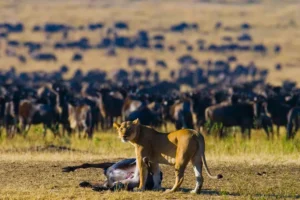
Another reason this period attracts visitors is the arrival of the Great Migration in the Maasai Mara, usually beginning in July and continuing through September. Large herds of wildebeest and zebras move north from Tanzania’s Serengeti, creating one of the most remarkable wildlife events in Africa.
Understanding Kenya’s Safari Seasons
Kenya’s climate is shaped by alternating dry and rainy seasons. These seasonal patterns influence animal behavior, vegetation growth, road conditions, and visitor numbers.
Dry Season (June to October)
The dry season is widely considered the most dependable time for safari travel in Kenya. Rainfall is minimal, temperatures are comfortable, and visibility across the savannah improves significantly.
During this period, animals concentrate around water sources because rivers and watering holes become essential for survival. This natural pattern brings many species into the same areas, allowing travelers to observe large numbers of animals during game drives.
Conditions during the dry season also make travel between parks easier. Roads are generally in good condition, and most safari camps operate at full capacity because the demand for wildlife viewing is high.
Short Dry Season (January to February)
A second favorable safari window occurs between January and February. These months come after the short rainy season and offer warm temperatures with relatively dry conditions.
Wildlife viewing during this period can be excellent because the landscapes remain open and animals are still active. The crowds are typically smaller than during the peak migration months, which can make the overall safari experience feel more relaxed.
Travelers who prefer quieter parks but still want reliable wildlife sightings often choose this time of year.
Rainy Seasons (March-May and November-December)
Kenya experiences two rainy seasons that affect safari conditions in different ways.
The long rains, which occur from March to May, bring heavier and more consistent rainfall. During this period, vegetation grows quickly and landscapes become greener. While the scenery is beautiful, the thicker vegetation can make wildlife harder to locate during game drives. Some safari camps temporarily close because road conditions can become difficult.
The short rains, typically from November to December, are lighter and usually arrive as brief afternoon showers. Wildlife viewing remains possible, and the parks are often less crowded. This period can appeal to travelers who prefer quieter experiences and more flexible accommodation rates.
Best Time to See the Great Migration in Kenya
For many travelers, witnessing the Great Migration is the highlight of a Kenya safari. This event involves more than a million wildebeest, along with zebras and gazelles, moving across the Serengeti ecosystem in search of fresh grazing areas.
The migration typically reaches Kenya’s Maasai Mara National Reserve between July and September, although exact timing can vary each year depending on rainfall patterns.
One of the most dramatic moments occurs when herds attempt to cross the Mara River. These crossings attract predators such as crocodiles and lions, creating intense wildlife interactions that draw photographers and wildlife enthusiasts from around the world.
Because the migration period attracts many visitors, safari lodges in the Maasai Mara often book months in advance.
Kenya Safari Month-by-Month Guide
Understanding how conditions change throughout the year helps travelers plan the type of safari experience they want.
January to February
These months offer warm temperatures and generally dry conditions. Wildlife viewing is strong across many parks, and visitor numbers remain lower than during the peak migration season.
March to May
The long rainy season begins during this period. Landscapes become lush and green, but wildlife viewing becomes less predictable due to dense vegetation and muddy roads.
June
June marks the beginning of the main dry season. Conditions gradually improve, and wildlife sightings become more frequent as animals move toward reliable water sources.
July to September
This period is the peak safari season in Kenya. The Great Migration arrives in the Maasai Mara, and wildlife activity across the country’s parks is often at its highest.
October
Wildlife viewing remains strong as the dry season continues. Migration herds may still be present in the Maasai Mara before gradually moving south again.
November to December
Short rains arrive during these months, bringing brief showers and greener landscapes. While wildlife can still be seen, the parks tend to be quieter and more relaxed.
Best Time for Safari in Kenya by National Park
Different parks have slightly different wildlife patterns, so timing can vary by destination.
Maasai Mara National Reserve
The most popular time to visit is July through October, when the Great Migration moves through the reserve.
Amboseli National Park
Wildlife viewing is strongest during June to October and again in January and February, when dry conditions concentrate animals near water sources.
Samburu National Reserve
The dry months from June to October provide the best opportunities to see wildlife in this northern reserve.
Tsavo East and Tsavo West
Both parks offer reliable wildlife viewing during the dry season, particularly from June to October.
Tips for Planning a Kenya Safari
Choosing the right time for a safari is only one part of the planning process. A few practical considerations can make the trip smoother and more rewarding.
Booking early is essential for travelers who want to visit during the migration season, especially in the Maasai Mara where accommodations fill quickly. It is also helpful to consider combining Kenya with nearby destinations, such as Tanzania, to explore different ecosystems within the same trip.
Finally, travelers should think about what type of wildlife experience they want most. Some prefer the excitement of migration season, while others enjoy quieter parks with fewer vehicles and more flexible travel schedules.