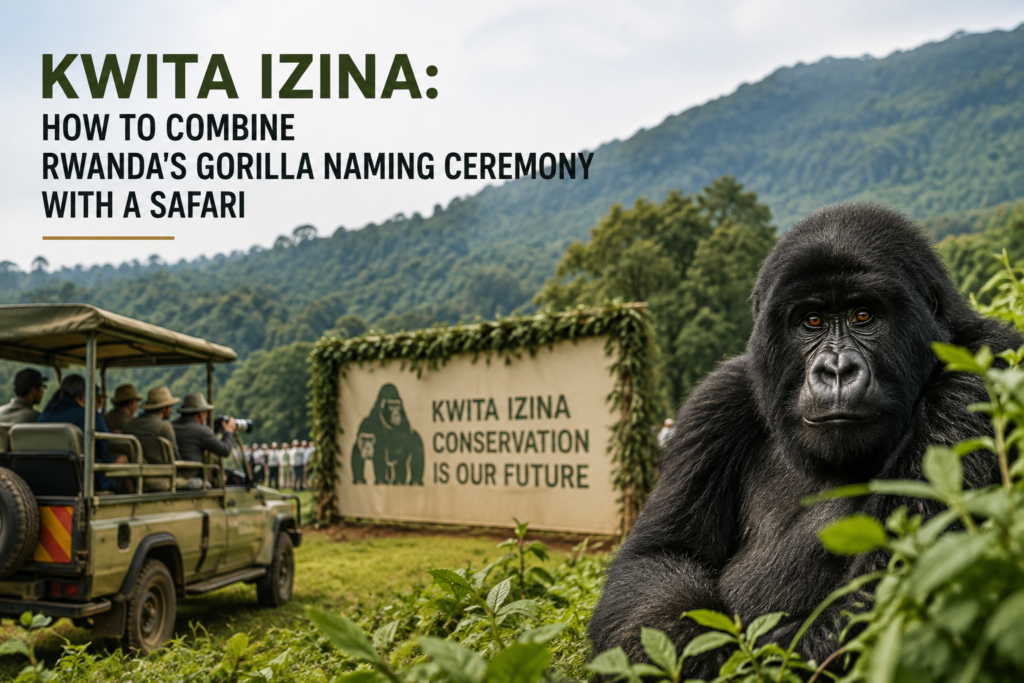
There’s a hillside outside Kinigi, at the foot of the Virunga volcanoes, that fills up every September with drummers, dancers, and a mix of conservationists, officials, and travelers who flew in just for one afternoon. That’s Kwita Izina — Rwanda’s annual mountain gorilla naming ceremony. If you’re already thinking about gorilla trekking in Rwanda, building a trip around this ceremony adds a layer most travellers never get to see.
What It Is
Kwita Izina means “to give a name” in Kinyarwanda, borrowed from an old tradition of naming newborn babies in front of family and neighbors. Rwanda adapted it in 2005 for a different kind of newborn: baby mountain gorillas. Each year rangers track which infants were born over the past twelve months, and a public ceremony gives each one a name, usually tied to its birth story or a bit of local meaning.
This year’s ceremony — the 21st — falls on Friday, September 4, 2026, in Kinigi, under the theme “Conservation is Life: Sustaining the Future.” Twenty-two gorillas will be named, bringing the total named since 2005 to 460.
Why It’s More Than a Photo-Op
Mountain gorillas are the only great ape species whose wild population is growing — every other great ape is declining. Around 1,100 mountain gorillas now live across the Virunga Massif (spanning Rwanda, Uganda, and the DRC) and the separate Bwindi ecosystem. In the 1980s, that number had dropped to a few hundred.
Tourism largely funded the turnaround. A gorilla trekking permit in Rwanda costs $1,500 per person per day, capped at 96 permits daily to avoid overexposing the animals, and 10% of that revenue goes straight into local schools, clinics, and roads. Rwanda’s tourism sector pulled in a record $685 million in 2025, up from $647 million the year before — gorilla trekking is the clear anchor of that growth, and Kwita Izina is essentially how Rwanda narrates that success out loud once a year.
What Happens at the Ceremony
The event stretches over a few days in early September. Invited “namers” — international guests, researchers, celebrities, community members — often trek in to see their assigned gorilla family beforehand, alongside community concerts in Kinigi. On naming day itself, each namer announces their gorilla’s name in front of the crowd, with the volcanoes as a backdrop, Intore dancers performing, and speeches from Rwandan officials. You don’t have to be an official namer to attend — it’s open to the public, and plenty of locals turn out alongside international visitors.
Fitting a Trek Around It
September falls within Rwanda’s drier trekking season, and most travelers avoid trekking on the exact ceremony day, since park access is more restricted for namers that day. A reasonable structure: land in Kigali a day or two early, drive roughly two and a half to three hours to Musanze/Kinigi, trek on a separate day from the ceremony, and add golden monkey tracking or the Dian Fossey grave hike if you have extra time. Permits are capped and September books up fast, so this isn’t a last-minute trip — lock in permits and Kinigi lodging well ahead.
Building It Into a Bigger Trip
Rwanda’s small size makes it easy to extend. Common add-ons include Akagera National Park for a classic Big Five safari, Bwindi Impenetrable Forest in Uganda for a second gorilla-trekking country, or a short flight to Kenya or Tanzania to layer in a savanna safari or the Great Migration. If you’re deciding between a longer multi-country itinerary or a shorter one, Rwanda pairs well with either — just note Rwanda isn’t covered by Tanzania’s visa system, so it’s worth confirming entry requirements for every country on the route before booking flights.
When to Book
The date shifts slightly year to year but always lands in early September. Plan six to twelve months out — permits sell out and Kinigi’s lodges fill quickly once dates are announced. If your schedule allows it, aim your trek for a few days before or after the ceremony rather than the exact date for a calmer trip.
Final Thoughts
Kwita Izina is wildlife, culture, and conservation in one week, without feeling like it’s checking boxes. Timing a Rwanda trek around it adds context a standard trek doesn’t offer. Whether it’s the anchor of a Rwanda-only trip or one stop on a longer East and Southern Africa safari, it’s worth building a September around. Get in touch if you’d like help mapping out the logistics.