For over 50 years, Little Governors’ Camp has been spoken about in a specific way: as one of the most beloved, most requested camps in the entire Maasai Mara. Tucked into riverine forest at the base of the Oloololo Escarpment, reached by a short boat crossing over the Mara River, it built a reputation less on scale than on intimacy – an unfenced camp where wildlife moved freely through the grounds and dinner was eaten by candlelight under canvas.
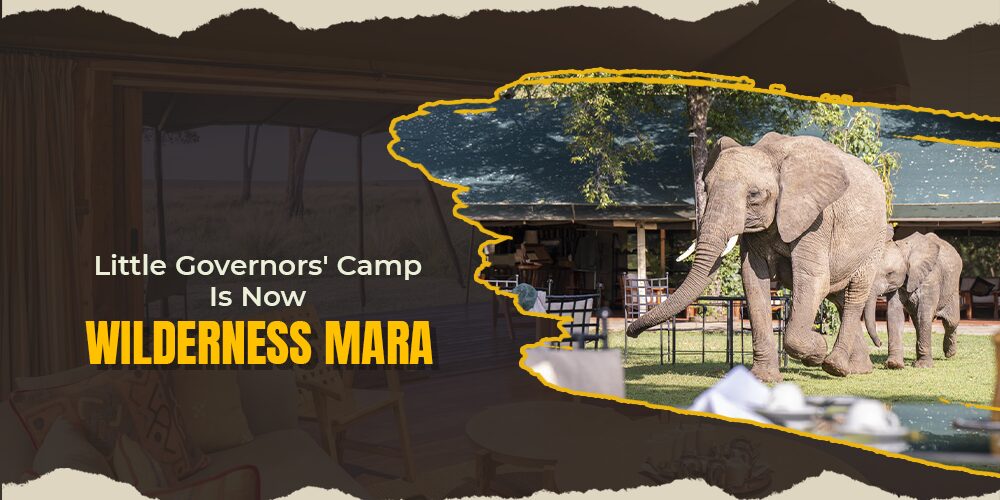
That camp, as it was, no longer exists. On June 1st, it reopened – completely rebuilt – as Wilderness Mara.
Why This Is a Bigger Deal Than It Sounds
Wilderness took majority ownership of the Governors’ Camp Collection back in 2016, but for years the properties continued operating under the Governors’ name. Wilderness Mara is the first of them to be fully absorbed into the Wilderness brand and rebuilt to its standard – interiors by Chris Payne of White Elephant Trading Company, sustainably sourced materials, locally crafted furnishings, all folded into the Wilderness “Educate, Empower, Protect” conservation framework.
For a camp with this much history, that’s a meaningful shift – not a refresh, but a full reimagining of what one of the Mara’s most storied properties can be.
Fewer Tents, More Space
The old camp had 17 tented suites. The new one has 12 – including a family unit – each positioned along the edge of a seasonal marsh that draws plains game and birdlife right up to camp. Every suite has a freestanding bathtub, indoor and outdoor shower, and an elevated private deck.
Fewer beds means fewer vehicles on game drives and more room per guest across the property – a deliberate trade of scale for privacy.
Still the Only Camp With Both Sides of the River
One thing hasn’t changed: location. Wilderness Mara sits in the Mara Triangle, at the base of the Oloololo Escarpment, and remains the only camp in the Mara with access to both sides of the Mara River. That means a wider range of habitats and more game-viewing territory to work with than camps confined to a single bank – a genuine structural advantage, not just a marketing line.
When to Go
The Mara Triangle is a year-round destination, but if the Great Migration river crossings are the goal, the window is roughly July through October, when wildebeest and zebra herds cross the Mara River in large numbers. The Triangle is managed by the Mara Conservancy, with significantly fewer vehicles and lodges than the main reserve, so crossings here tend to be watched with far less crowding than the more heavily trafficked parts of the Mara.
Outside that window, expect quieter game viewing, lower rates, and the resident wildlife the Mara is known for even without the migration in town – over 470 recorded bird species, plus healthy lion, elephant, and big cat populations year-round.
The Camp Itself
Beyond the suites, Wilderness Mara has a spa, gym, pool, and in-camp photographic studio. Activities are built around morning and afternoon game drives, hot air balloon safaris with Governors’ Balloon Safaris, and visits to nearby Maasai manyattas. Access is via Kichwa Tembo Airstrip – about 45 minutes by air from Nairobi Wilson, followed by a 15-minute drive to camp.
One operational note worth knowing: because the Mara Triangle falls within the Maasai Mara National Reserve, off-roading and night drives are restricted, as is standard across the reserve – not a Wilderness Mara-specific rule.
On the conservation side, tourism revenue from the Mara Triangle directly funds the Mara Conservancy’s anti-poaching and habitat protection work – one of the more tangible conservation models operating in the Mara today.
Ways to Save on Your Wilderness Mara Stay
A few current Wilderness offers pair well with a trip here:
Long Stay Discount – 5% off accommodation for stays of 6+ nights, in low season (not valid 1 June–31 Oct or 20 Dec–5 Jan).
Wilderness Honeymoon Special – 50% off accommodation for one spouse, for travel within 6 months of the wedding.
No Single Supplement — Waived for the first two solo travelers in a booking, in low and shoulder seasons.
Kids Stay Free — One child’s accommodation free per full-paying adult in a family room, in low and shoulder seasons (children 16 and under, family room booked for the full itinerary).
Terms and season restrictions apply to all offers – happy to check what stacks best for your dates.
Our Take
A full rebuild of one of the Mara’s most legendary camps, with the migration-crossing advantage of the Mara Triangle still fully intact, is exactly the kind of shift worth knowing about early – availability at a 12-suite camp during peak crossing season will move fast.
If Kenya and the Great Migration are on your list, reach out – we’d love to help you build a trip around it.






![Some journeys are even more special when shared.
Imagine waking up to the sounds of the African bush, exploring Kenya’s remote conservancies together, enjoying private picnics and spending nights beneath endless African skies.
From The Emakoko and Lewa House to Ol Malo Lodge and Sarara Treehouses, this romantic Kenya safari brings together four extraordinary stays, each offering a different side of the wilderness.
2027 Long Stay Savings: Enjoy 10% OFF on stays of 5+ nights. Select dates apply.
Whether you're planning a honeymoon, anniversary or simply an unforgettable escape for two, we'll help you create a safari that feels entirely your own.
📩 DM us to start planning your romantic Kenya safari.
[Kenya Honeymoon Safari, Luxury Kenya Safari, Romantic Safari, Kenya Safari for Couples, Lewa Conservancy, Laikipia, Sarara Treehouses, Bespoke African Safari]](https://travelafricamore.com/core/modules/313e568472/img/placeholder.png)