It is one of the most common questions we get at Travel Africa & More: “I’m going to Victoria Falls, but which side should I stay on?”
It’s a valid dilemma. The mighty Zambezi River forms the border between these two nations, and the waterfall itself is shared between them. While you are technically looking at the same sheet of falling water, the experience from the Zimbabwean side is drastically different from the Zambian side.
If you are flying halfway across the world to see the “Smoke that Thunders,” you want to make sure you’re standing on the right cliff edge.
Here is the honest, 2026 breakdown of the Zimbabwe vs. Zambia debate to help you decide.
Round 1: The Views
Zimbabwe: The Short Answer
If your main goal is classic, panoramic views and seeing the iconic “Main Falls” in all their glory, Zimbabwe wins. It faces the bulk of the waterfall and offers year-round water flow. However, if you want adventure, close-up encounters, and the chance to swim on the edge of the abyss (hello, Devil’s Pool), Zambia takes the gold. But don’t make up your mind just yet. Let’s dive into the details.The Front-Row Seat
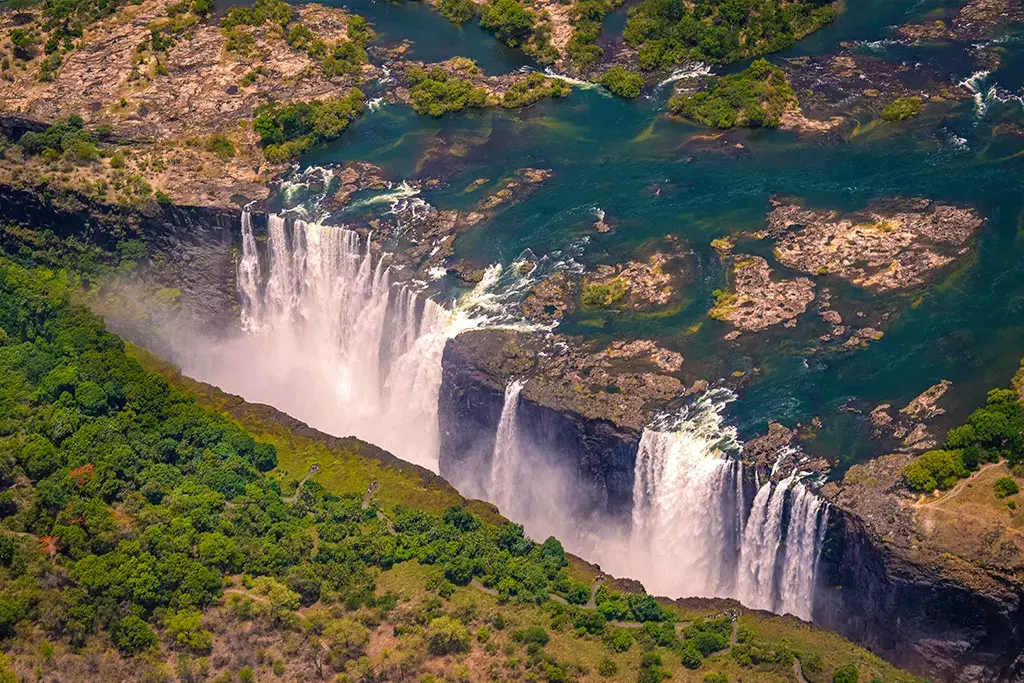
Roughly 75% of Victoria Falls lies on the Zimbabwean side. This geography gives Zimbabwe a massive advantage when it comes to sightseeing. The national park here runs parallel to the falls, offering a neat, paved path with 16 numbered viewpoints. From here, you get that postcard-perfect shot. You are looking directly at the Main Falls, the Devil’s Cataract, and the Horseshoe Falls. If you want to capture the full width of the waterfall in one frame (or as close as you can get to it), this is where you need to be.- Best Photo Spot: Viewpoint #7 for the classic Main Falls shot, or Viewpoint #15 (Danger Point) for a dramatic look down the gorge.
Zambia: The Wild Side
Zambia possesses about 25% of the frontage, known as the Eastern Cataract. While you see less of the “wall of water,” you get significantly closer to it. The Zambian side is about immersion. The trails here take you right to the edge. The famous Knife-Edge Bridge is a narrow footbridge that spans a deep gorge, where you are bombarded by spray coming from all directions. It’s less about seeing the falls and more about feeling them.- Best Photo Spot: The Knife-Edge Bridge (if your camera is waterproof!) or the Boiling Pot trail, which takes you down to the water level for a unique angle looking up at the bridge.
Round 2: Seasonality (The Water Levels)
This is the single most important factor in your decision. The Zambezi River is not a tap that stays on all year; it rises and falls with the rains.- High Water (Feb – May): The falls are at their most powerful. On the Zimbabwe side, the spray can be so intense that it obscures the view. You will hear the roar, but you might just see a white wall of mist. Paradoxically, the Zambian side can be “too wet” to enjoy without full rain gear.
- Low Water (Oct – Dec): This is where the difference is critical. As the dry season peaks, the water level drops. On the Zambian side, the Eastern Cataract can dry up completely, leaving you staring at a dry rock wall. However, the Zimbabwean side flows year-round. Even in the driest months, the Main Falls will still be thundering.
Round 3: The Activities
The view isn’t the only thing that matters. What do you want to do? Choose Zambia if:- You want to swim on the edge. The famous Devil’s Pool (and the alternative Angel’s Pool) is only accessible from the Zambian side via Livingstone Island. This is a bucket-list experience where you swim in a natural rock pool at the very lip of the falls.
- You love microlights. The “Flight of Angels” helicopter ride is available on both sides, but the open-air Microlight flights are strictly a Zambian activity.
- You want a classic safari vibe. The town of Victoria Falls is situated right inside a national park. It is common to see warthogs, baboons, and even elephants wandering the streets or near your hotel.
- You want convenience. Most hotels in Victoria Falls town are walking distance from the park entrance. In Zambia (Livingstone), many lodges are located further upriver, requiring a taxi or shuttle to get to the falls.
Practicalities: Costs & Border Crossings (2026 Update)
Entrance Fees
- Zimbabwe: $50 per person (International).
- Zambia: $20 per person (International). Note: Keep an eye on this, as fees are subject to change, but Zambia remains the more budget-friendly park entrance.
Visas: The KAZA UniVisa
Here is the best news: You don’t really have to choose. The KAZA UniVisa costs $50 and allows you uncapped access to both Zimbabwe and Zambia for 30 days. It even covers day trips to Botswana (Chobe). If you are staying on one side, you can easily cross the Victoria Falls Bridge to see the other. The walk takes about 20 minutes, offers incredible views of the gorge, and you can watch the bungee jumpers throwing themselves off the bridge. New for late 2026: The Victoria Falls border post has recently moved to 24-hour operations. This is a game-changer for tourists, meaning you don’t have to rush back before the gate closes at sunset. You can now enjoy a leisurely dinner on the Zambian side and cross back to your hotel in Zimbabwe without stress.So, which side wins?
- For First-Timers & Photographers: Choose Zimbabwe. You get the classic views, year-round water, and that quintessential “safari town” atmosphere.
- For Adrenaline Junkies & Summer Travelers: Choose Zambia. The access to Devil’s Pool and the sheer power of the Knife-Edge Bridge offers a thrill that is hard to beat.