
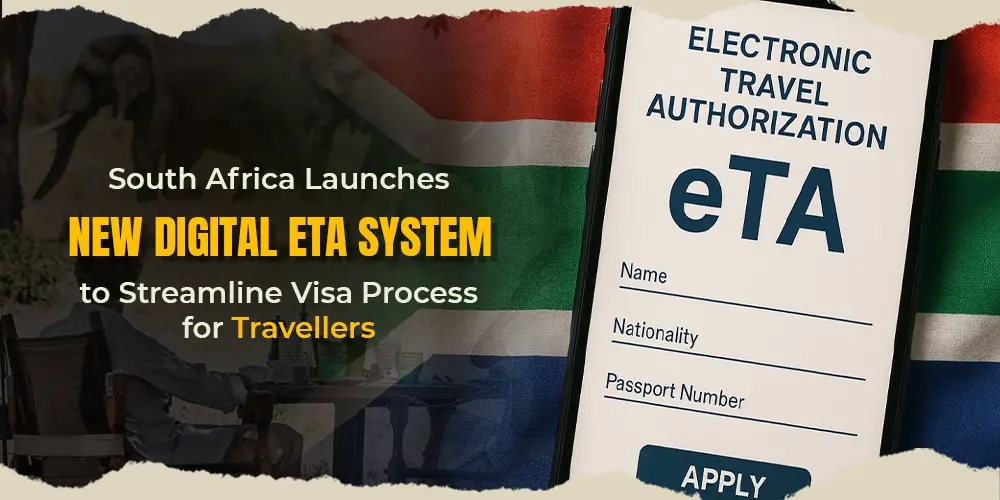
South Africa Launches New Digital ETA System to
Streamline Visa Process for Travellers
South Africa has officially rolled out its long-awaited Electronic Travel Authorisation (ETA) system, replacing slow paper-based visa applications with a fast, pre-departure digital clearance process for eligible international visitors.
Quick Summary
- South Africa’s ETA system was officially launched by President Cyril Ramaphosa at OR Tambo International Airport on 12 August 2026.
- The system combines biometric verification and automated background checks to approve eligible travellers before they board their flight.
- It replaces traditional paper visa applications for select nationalities, cutting processing times significantly.
- The rollout follows a successful pilot during South Africa’s G20 Presidency and is being expanded in phases.
- More than 6,000 fraudulent applications were flagged and rejected in the system’s early days, according to Home Affairs officials.
What Is South Africa's New ETA System?
The Electronic Travel Authorisation is a fully online alternative to traditional visitor visas for tourism and business travel. Instead of visiting a South African embassy or consulate, eligible travellers can now apply for entry clearance from home, well ahead of their trip. The platform is powered by artificial intelligence and automated risk screening, allowing most applications to be processed within hours rather than the weeks typically associated with paper-based visa channels.
Once approved, travellers receive a digital authorisation linked to their passport, generally valid for multiple entries and stays of up to 90 days per visit, with the option to apply for a single 90-day extension online. Approval is confirmed through a QR code that can be stored digitally, removing the need for physical stamps or stickers at this stage of entry.
Importantly, the ETA cannot be obtained on arrival – travellers who are required to hold one but arrive without it risk being denied entry, so applying in advance is essential.
Why South Africa Introduced the ETA
The initiative forms the centrepiece of the Department of Home Affairs’ broader digital transformation programme, aimed at modernising the country’s immigration infrastructure. Officials have described the goal as twofold: making legitimate travel faster and more predictable, while tightening border security through better upfront screening.
The system was first trialled during South Africa’s G20 Presidency, with Phase 1 covering delegates and diplomats from China, India, Indonesia, and Mexico travelling through OR Tambo and Cape Town International Airports. Following the pilot’s success, the government moved to a full public launch, with plans to expand eligibility and airport coverage in further phases.
Home Affairs has also highlighted early results from the fraud-screening component of the system, reporting that thousands of suspicious applications were identified and blocked before travellers could reach the border – a sign the automated risk checks are functioning as intended.
What This Means for Travellers to Africa
For international visitors planning a South African safari, city break, or business trip, the ETA promises a smoother path to entry – provided the application is submitted correctly and in advance. Key points for travellers to keep in mind:
- Apply early: The ETA must be secured before departure; it cannot be issued at the port of entry.
- Check eligibility: Coverage is being rolled out in phases by nationality, so travellers should confirm whether their passport currently qualifies before booking.
- Keep documents ready: Passport details, travel dates, and accommodation information are typically required during the online application.
- Watch for extensions: A single 90-day extension is available online for those wishing to stay longer, avoiding a separate visa application.
- Beware of unofficial websites: For official information, full country eligibility lists, and to submit an application, visit the South Africa ETA Portal.
The Bigger Picture for Africa's Travel Industry
South Africa’s shift to digital travel authorisation reflects a wider trend across the continent, as several African destinations move toward streamlined, technology-driven entry systems to boost tourism competitiveness. For an industry still recovering booking momentum in key long-haul markets, faster and more predictable visa outcomes are expected to reduce last-minute cancellations and encourage spontaneous bookings – while easing pressure on consulates and embassies handling high visitor volumes.
As the phased rollout continues, travellers and travel operators planning safaris, tours, or business trips to South Africa are advised to monitor official Home Affairs updates for the latest list of eligible nationalities and supported airports.




![Some journeys are even more special when shared.
Imagine waking up to the sounds of the African bush, exploring Kenya’s remote conservancies together, enjoying private picnics and spending nights beneath endless African skies.
From The Emakoko and Lewa House to Ol Malo Lodge and Sarara Treehouses, this romantic Kenya safari brings together four extraordinary stays, each offering a different side of the wilderness.
2027 Long Stay Savings: Enjoy 10% OFF on stays of 5+ nights. Select dates apply.
Whether you're planning a honeymoon, anniversary or simply an unforgettable escape for two, we'll help you create a safari that feels entirely your own.
📩 DM us to start planning your romantic Kenya safari.
[Kenya Honeymoon Safari, Luxury Kenya Safari, Romantic Safari, Kenya Safari for Couples, Lewa Conservancy, Laikipia, Sarara Treehouses, Bespoke African Safari]](https://travelafricamore.com/core/modules/313e568472/img/placeholder.png)