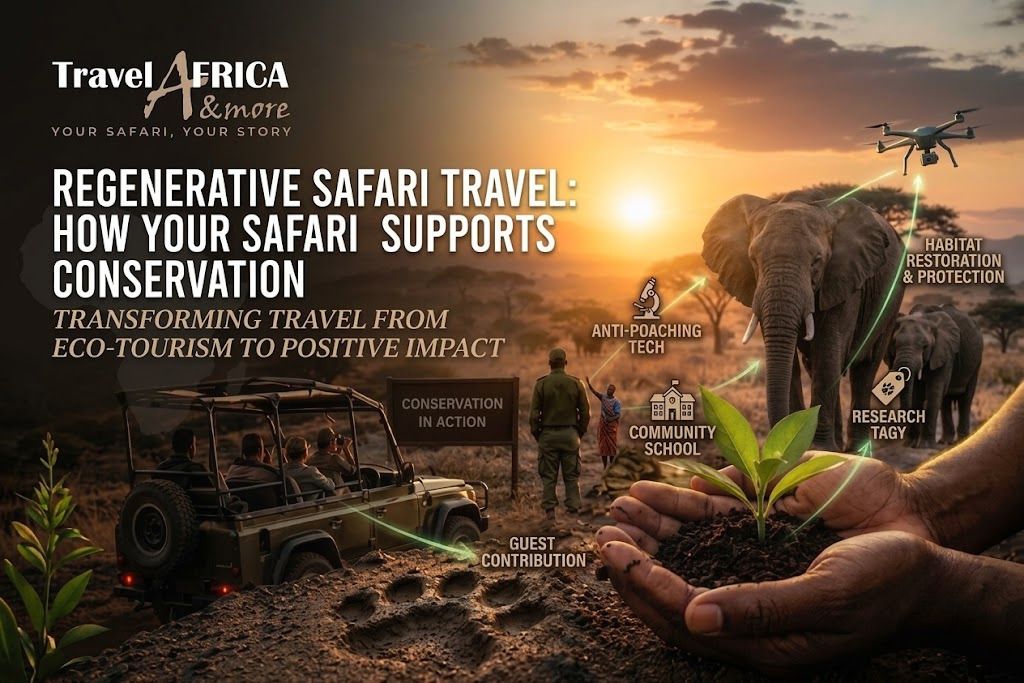
An African safari can be more than an opportunity to see wildlife. When planned responsibly, your journey can contribute to wildlife conservation, support local communities and help protect the landscapes that make safari possible.
This is where regenerative safari travel is gaining attention. Rather than focusing only on reducing the negative impact of tourism, regenerative travel asks how tourism can contribute positively to the destinations people visit.
For safari travellers, this means considering where your money goes, how safari camps operate, how wildlife is protected and how local communities benefit from tourism.
What Is Regenerative Safari Travel?
Regenerative safari travel is an approach to tourism that aims to leave a destination stronger than it was before the visit. It builds on ideas from sustainable and responsible tourism but places greater emphasis on creating positive outcomes for wildlife, ecosystems and communities. A sustainable safari generally focuses on reducing environmental impact through responsible resource use, waste reduction and conservation practices. Regenerative safari travel takes the idea further by supporting initiatives that actively restore habitats, protect wildlife and strengthen local communities. This can include staying at camps that contribute to conservation programmes, visiting community-managed conservancies, supporting locally owned businesses and choosing safari operators that work with conservation organisations.How African Safaris Support Wildlife Conservation
Wildlife conservation requires long-term funding. Safari tourism can provide an important source of revenue for protected areas, private conservancies and community conservation programmes. Visitors contribute through accommodation, park fees, conservation fees, guiding services and other safari-related activities. When these funds are managed responsibly, they can support habitat protection, wildlife monitoring, anti-poaching efforts and conservation employment. If you want to understand this relationship in more detail, explore our guide on how African safaris support conservation. The connection between tourism and conservation can be particularly important in areas where wildlife shares land with local communities. Revenue generated through responsible safari tourism can create an economic reason to protect wildlife and maintain natural habitats.How Safari Tourism Supports Local Communities
Conservation cannot be separated from the people who live around wildlife areas. A responsible safari can contribute to local communities through employment, guiding, hospitality, transportation, food production and other services. Some safari areas also support community projects involving education, healthcare, infrastructure and skills development. Community conservancies provide another example. In these areas, local communities can participate in managing land and benefit from tourism revenue. Understanding the difference between national parks, reserves, concessions and conservancies can help travellers appreciate how different conservation models operate. Our guide to parks, reserves, concessions and conservancies explains these differences in more detail. For travellers, choosing a safari that works with local communities can therefore make the trip more meaningful while contributing to the long-term protection of wildlife areas.What Makes a Safari Truly Regenerative?
Not every safari marketed as sustainable or responsible has the same impact. When evaluating a conservation-focused safari, consider what happens beyond your accommodation. Look for safari experiences that demonstrate:- Support for wildlife conservation programmes
- Employment and training opportunities for local people
- Partnerships with community conservancies
- Local sourcing of food and services
- Responsible wildlife viewing practices
- Efforts to reduce water and energy consumption
- Waste reduction and responsible resource management
- Protection and restoration of natural habitats
- Contributions to conservation or community projects