
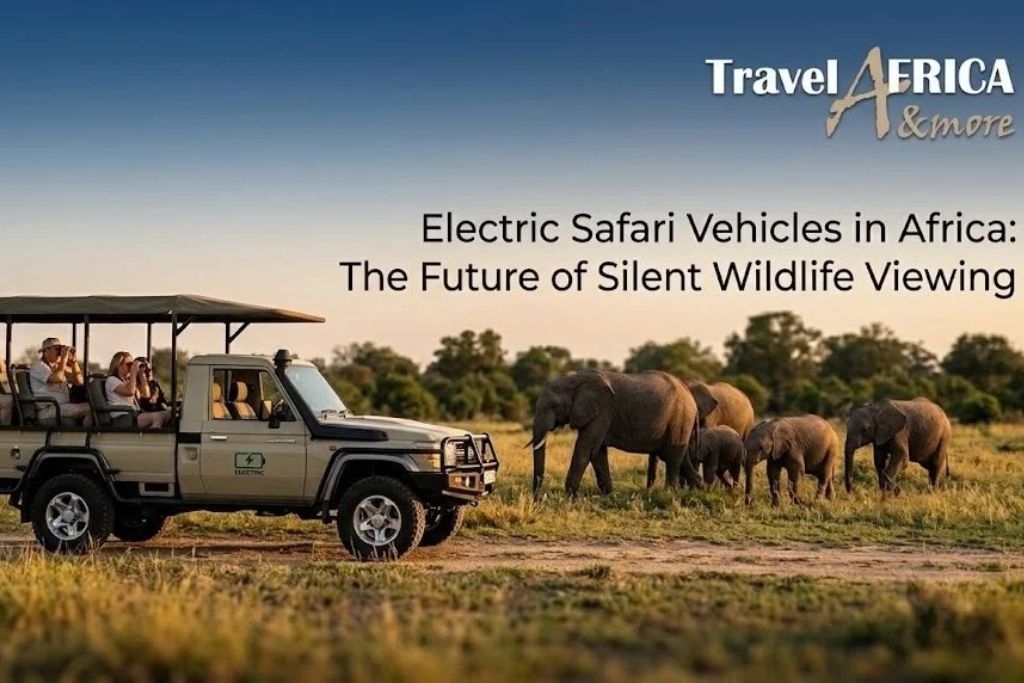
African safaris are changing as conservation, technology and traveller expectations increasingly intersect. One development attracting attention is the emergence of electric safari vehicles in Africa. From game drives to conservation operations, electric mobility offers a different approach to moving through wildlife areas while potentially reducing direct emissions and engine noise.
But what are electric safari vehicles, where are they being used, and what could they mean for the future of African wildlife viewing? From East and Southern Africa safari destinations to remote conservation areas, the transition toward quieter and potentially lower-impact transportation raises important questions about technology, infrastructure and wildlife experiences.
For travellers, the appeal goes beyond technology. A quieter vehicle can make it easier to hear birds, animal calls and the sounds of the bush, while electric mobility can form part of a wider approach to sustainable safari travel. But what are electric safari vehicles, where are they being used, and what could they mean for the future of African wildlife viewing?
What Are Electric Safari Vehicles?
An electric safari vehicle uses an electric motor powered by a rechargeable battery instead of relying entirely on a conventional petrol or diesel engine. Depending on the design, these vehicles can be used for game drives, lodge transfers and other operations within conservation areas.
Electric game-drive vehicles can offer several practical characteristics that are relevant to safari environments. Electric motors can operate quietly at lower speeds, while regenerative braking can recover some energy during deceleration.
However, electric vehicles are still developing as a safari solution. Remote camps and conservation areas can present challenges around charging infrastructure, battery range, terrain and access to technical support.
Why Is Africa Exploring Electric Safari Vehicles?
The growth of electric mobility in safari tourism reflects several overlapping trends.
Quieter Wildlife Viewing
Sound is an important part of experiencing the African bush. Conventional engines can become a noticeable part of a game drive, particularly when a vehicle is stationary near wildlife.
Silent safari vehicles can reduce mechanical noise from the vehicle itself. This may allow travellers to spend more time listening to the natural environment, communicating quietly with guides and concentrating on wildlife behaviour.
For photographers and birdwatchers, a quieter vehicle can also create a more immersive experience.
Quieter does not automatically mean that wildlife is unaffected. Animals respond to many factors, including vehicle movement, distance, human presence, and the surrounding environment. Responsible driving practices therefore remain important regardless of the vehicle’s power source.
Lower Direct Emissions
Electric safari vehicles do not produce tailpipe emissions while operating. This can potentially reduce direct fossil-fuel use during game drives and lodge transportation.
The overall environmental benefit, however, depends partly on how the electricity used to charge the vehicle is generated. This makes renewable energy an important part of the wider conversation around electric safari operations.
Electric Safari Vehicles and Wildlife Conservation
The potential role of electric vehicles extends beyond tourism.
Electric mobility can also be considered for wildlife conservation activities, including ranger transportation, monitoring and other operations within protected areas. Reducing fuel requirements for some activities could complement broader conservation strategies.
This is particularly relevant because safari tourism and conservation are closely connected across many African destinations. Revenue from tourism can support protected areas, local employment and conservation initiatives, although the benefits vary between destinations and operators.
Travellers interested in this wider relationship can explore our guide to regenerative safari travel and how tourism can contribute to conservation and local communities.
Where Are Electric Safari Vehicles Emerging?
Electric safari vehicles are still an emerging technology rather than a universal replacement for conventional safari vehicles.
Kenya has attracted attention for electric mobility projects connected with both tourism and conservation. The Maasai Mara, in particular, has seen developments involving electric vehicles and renewable-energy-based transportation.
Across East and Southern Africa, the potential applications are broader. Countries such as Kenya, Tanzania, South Africa, Botswana, Zambia, Zimbabwe and Namibia contain diverse safari environments where vehicle requirements can differ considerably.
Travellers can explore the different landscapes and safari experiences through our African safari destinations guide.
The Role of Solar Power in Electric Safaris
One of the most important questions surrounding electric safari vehicles is simple: Where does the charging electricity come from?
Safari camps are often located far from conventional infrastructure. Solar power and battery storage can therefore provide an opportunity to connect electric mobility with renewable energy.
Some African safari properties are already using solar power as part of their operations. This demonstrates why the future of low-impact safari travel is likely to involve more than simply replacing a diesel vehicle with an electric one.
The wider system matters: renewable energy, water management, waste reduction, conservation and community engagement can all contribute to a property’s environmental approach.
For another perspective on changing safari experiences and conservation-focused destinations, explore our article on Africa’s greatest natural spectacles.
What Challenges Do Electric Safari Vehicles Face?
Electric safari vehicles also have limitations.
Remote safari environments can make charging infrastructure difficult to establish. Battery range, charging time, vehicle weight, terrain and maintenance requirements can all influence whether an electric vehicle is practical for a particular operation.
There is also the question of energy sources. An electric vehicle charged using renewable energy has a different environmental profile from one charged using electricity generated primarily from fossil fuels.
For these reasons, the transition to electric safari vehicles is likely to develop differently across Africa rather than following one universal model.
What Does the Future Hold for Electric Safaris?
The future of electric safari vehicles in Africa will depend on technology, infrastructure, investment and the needs of individual conservation areas and safari operators.
Possible developments include improved battery technology, more solar-powered charging systems, electric lodge transfers and wider use of electric vehicles in conservation operations.
For travellers, electric vehicles could become another element of a broader shift toward thoughtful and lower-impact safari experiences. Choosing an electric game drive can be meaningful, but the vehicle is only one part of the equation.
The most responsible safari approach considers the entire journey—from transportation and accommodation to conservation, local communities and wildlife protection.
If you want to understand how safari experiences actually work across different destinations, our safari trip reports provide firsthand perspectives from East and Southern Africa.
Conclusion
Electric safari vehicles are emerging as an interesting development in African safari travel. Their potential advantages include quieter game drives, reduced direct emissions and possible applications in conservation operations.
Yet electric mobility should not be viewed as a complete solution to sustainable tourism. Charging infrastructure, energy sources, vehicle design and the wider practices of each safari operation all matter.
As African safari destinations continue to explore new approaches to conservation and responsible tourism, electric vehicles could become one part of a more thoughtful future for experiencing the continent’s wildlife.