
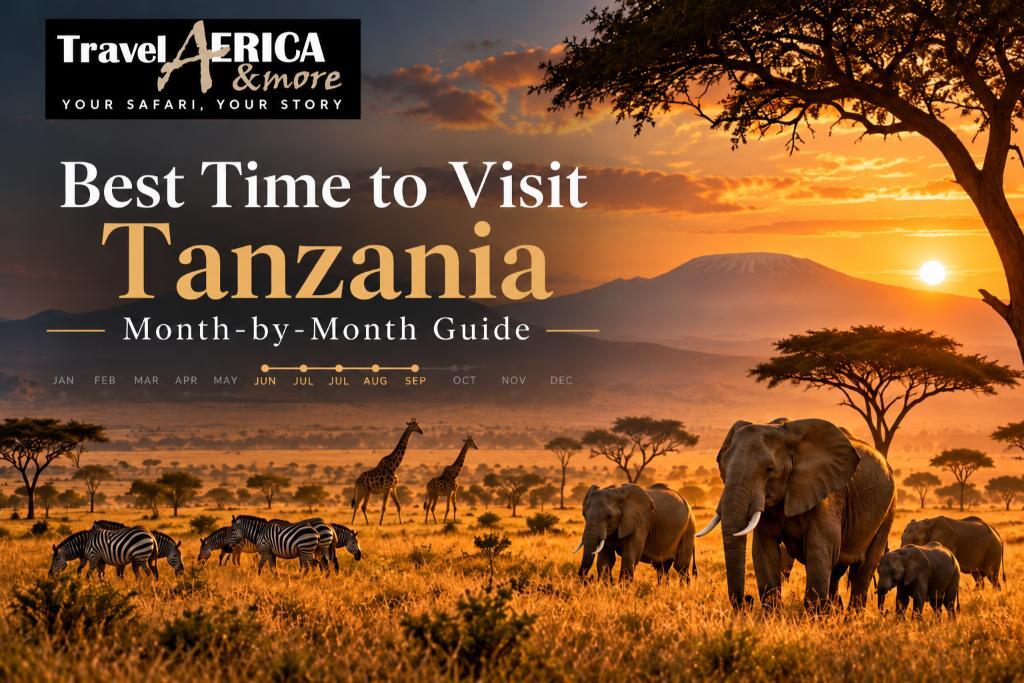
The best time to visit Tanzania is June to October, when the dry season concentrates wildlife around water and the northern Serengeti hosts Great Migration river crossings. January and February suit travelers who want calving season and fewer crowds. April and May bring the heaviest rain. Our own pick for balance is late September to October.
Key Takeaways
- The long dry season from June to October is the classic window. A short dry spell in January and February is the best quiet alternative.
- The herds spend most of the year inside Tanzania, so the country offers a migration experience in nearly every month. The location changes with the calendar.
- The long rains from March to May peak in April. Tracks turn to mud and some camps close.
- Ruaha, Nyerere, Mahale and Katavi are best from June to October.
- Choose your circuit before your month. The same week can be perfect in one park and poor in another.
Tanzania’s Four Weather Seasons
Tanzania does not follow a single wet and dry pattern. Two rainy periods and two dry periods shape every safari plan.
| Season | Months | Weather | What it means for safari |
|---|---|---|---|
| Long dry season | June to October | Dry with cool mornings and warm days | Best wildlife viewing and the highest rates |
| Short dry spell | January to February | Hot with possible afternoon showers | Calving season in the south and fewer crowds |
| Short rains | November to December | Brief showers that often fall overnight | Green landscapes and fresh grass |
| Long rains | March to May | Heavy rain peaking in April | Muddy tracks and some camp closures |
Best Time to Visit Tanzania by Month
Use this table to see where the herds and the best conditions are in each month.
| Month | Best bet | What to expect | Watch out for |
|---|---|---|---|
| January | Southern Serengeti and Ndutu | Herds gather on the short-grass plains as calving begins | Heat and afternoon showers |
| February | Southern Serengeti and Ndutu | Peak calving with active predators | Hot days |
| March | Ndutu and Tarangire | Calving winds down as the rains start | Thicker bush |
| April | Limited options | The wettest month with the lowest rates | Muddy tracks and closed camps |
| May | Wait for late May | Rains ease and drier conditions return | Check camp opening dates |
| June | Western Corridor, Tarangire and Ruaha | The dry season begins and animals move toward water | Rates start to rise |
| July | Northern Serengeti, Ruaha and Nyerere | Crossings begin and wildlife gathers at permanent water | Peak crowds |
| August | Northern Serengeti | Mara River crossings and dramatic game viewing | Busiest month |
| September | Northern Serengeti | Crossings continue with softer light | Crowds ease late in the month |
| October | Northern Serengeti and the southern circuit | Dry weather with herds starting to move south | Late month showers |
| November | Central and southern Serengeti | Short rains and herds heading toward the southern plains | Showers often overnight |
| December | Southern Serengeti and Ndutu | Emerald season with herds preparing to calve | Holiday rates |
Which Park Is Best in Which Months?
Tanzania has several safari circuits and each follows its own rhythm.
| Circuit | Parks | Best months | Why |
|---|---|---|---|
| Northern | Serengeti, Ngorongoro, Tarangire and Lake Manyara | June to October for crossings and January to February for calving | Strong year-round wildlife with a clear migration calendar |
| Southern | Ruaha and Nyerere | June to October | Animals gather at shrinking water and crowds stay light |
| Western | Mahale and Katavi | June to October | Remote parks with easier access in the dry season |
What Most Guides Skip
Rain Does Not Mean a Washout
Short rains from November to December often fall overnight and leave the days usable. The long rains are the real challenge. Seasons also vary from year to year. The Tanzania Meteorological Authority publishes seasonal rainfall outlooks for the short and long rains. Check the outlook before you commit to a shoulder month.
Do Not Plan Around a Single River Crossing
Crossings depend on herd behavior and grazing more than on the date. Herds may gather at the river for days before they cross. We suggest at least three nights in the northern Serengeti to improve your chances. That also gives you roughly six game drives for other sightings.
Ngorongoro Works in Almost Any Month
The Crater’s wildlife is largely resident and does not follow the migration. That makes it a reliable addition whatever your dates. Our guide to black rhinos in the Ngorongoro Crater explains what makes this wildlife special.
Pair Two Circuits in One Dry Season
The same June to October window suits both the northern Serengeti and the southern parks. A route that combines crossings in the north with Ruaha or Nyerere gives you two very different safaris in one trip. If you want to see the herds on the Kenyan side too, read our best time for a safari in Kenya.
Why We Lean Toward the Shoulder Windows
Animals do not follow the tourism calendar. Our planning advice is to skip the busiest stretch from June to September when possible. Late May and late September to October bring lower rates and quieter vehicles. In Tanzania late September to October still offers crossings in the north while crowds thin. You can also catch the herds moving south into Tanzania in October and early November. If you want to understand why a fixed calendar can mislead you, read why the traditional high season and low season calendar is becoming outdated.
Common Timing Mistakes
- Booking the northern Serengeti for calving.Calving takes place in the south.
- Booking April or May without checking camp closures.Many camps close during the heaviest rain.
- Choosing the southern circuit during the long rains.Tracks turn to mud and access gets harder.
- Staying one night in the north.One night rarely covers a crossing window.
- Treating the herd’s location as fixed by date.Movements shift with rain and grazing.
Frequently Asked Questions
What is the best month to visit Tanzania?
For most first-time travelers late September to October balances strong sightings with fewer crowds. July and August suit travelers who want river crossings and accept peak rates.
When is the Great Migration in Tanzania?
Calving runs from about January to March in the south. Herds move through the Western Corridor in June and July. Crossings in the northern Serengeti run from July to October.
When is the rainy season in Tanzania?
The long rains run from March to May and peak in April. The short rains run from November to December.
Is January a good time for a safari in Tanzania? Yes. January starts a short dry spell and calving begins in the southern Serengeti.
How many nights do I need?
Plan 9 to 11 nights for a first safari with three nights in each camp.
Plan Your Tanzania Dates
Tell us your travel month and what you most want to see. Our team will match you with the right circuit and camps for those dates. Book Your Tanzania African Safari Today!